Introduction
The hair care aisle—whether online or in-store—has become a battleground of thousands of brands competing for seconds of attention. Indie brands now control 32% of the $125 billion US beauty market, growing at roughly triple the pace of major conglomerates. With many hair care formulas functionally similar and consumer attention spans shrinking, a product often has just seconds to earn a second look.
Yet despite heavy investment in formulation and digital marketing, packaging frequently remains an afterthought. This is a costly mistake: packaging is the first physical interaction a consumer has with your brand—whether they're scanning a crowded shelf or unboxing a delivery at home. In a market where women make beauty purchase decisions in approximately five seconds, that first impression isn't just important—it's decisive.
TL;DR
TL;DR
- Custom hair care packaging shapes consumer perception before a single ingredient is read — it's your brand's first impression
- 73% of purchasing decisions happen at point of sale, making packaging the first thing shoppers engage with
- Generic packaging forces price-based competition and prevents premium positioning
- Design elements communicate brand values—sustainability, luxury, or natural ingredients—through visual and tactile cues
- Distinctive packaging fuels social sharing — YouTube unboxing videos rack up 25 billion views annually
What Is Custom Hair Care Packaging?
Custom hair care packaging means bottles, tubes, jars, boxes, labels, and finishes designed to reflect a specific brand's identity—not chosen from a generic catalog. It spans shape, material, color palette, typography, and tactile finish. Each decision is made with the brand in mind, not defaulted to whatever ships fastest.
Where it applies:
- Shampoos and conditioners
- Hair oils and serums
- Styling products and hair masks
- Gift sets and treatment lines
Every SKU a consumer touches or sees is an opportunity for brand expression. Brands that invest in custom packaging consistently report stronger shelf recognition and higher repeat purchase rates than those relying on off-the-shelf formats.
Key Advantages of Custom Hair Care Packaging
The advantages below connect directly to business outcomes brands actively track: shelf visibility, purchase conversion, pricing power, and customer loyalty.
Advantage 1: Shelf Presence and First-Impression Conversion
In physical retail and e-commerce thumbnail views, packaging determines whether a product gets picked up or scrolled past. Custom packaging engineered for visibility can be the difference between a sale and a pass.
How custom packaging creates this advantage:
Through intentional design choices that capture attention in under two seconds:
- Stands out in competitive shelf sets through strategic color contrast and palette blocking
- Breaks category norms with distinctive bottle shapes that catch the eye at a glance
- Signals quality from a distance using matte, soft-touch, or foil finishes
- Communicates the product's key benefit instantly through clear label hierarchy and typography
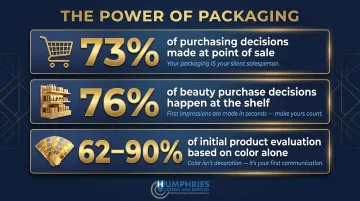
Research confirms that approximately 73% of purchasing decisions are made at the point of sale, with 76% of beauty purchase decisions happening at the shelf. An estimated 62–90% of a consumer's initial product evaluation is based on color alone.
When many hair care formulas are functionally similar, packaging is what drives the perception of quality. The brand that looks more premium is perceived as more effective — regardless of what's inside the bottle. Generic packaging leaves brands competing only on price, which is the hardest margin position to defend.
KPIs impacted:
- Shelf pick-up rate
- Add-to-cart rate (online)
- Conversion rate
- New customer acquisition
When this advantage matters most:
This advantage delivers highest impact when launching into competitive retail environments, expanding from D2C to brick-and-mortar, or introducing a new SKU into an established category where shelf space is fought over inch by inch.
Advantage 2: Brand Storytelling and Perceived Value
Custom packaging is your most cost-efficient storytelling medium. Every element — color palette, material, typography — communicates brand identity, values, and target customer before the product is opened.
How custom packaging creates this advantage:
Design choices tell stories generic packaging cannot:
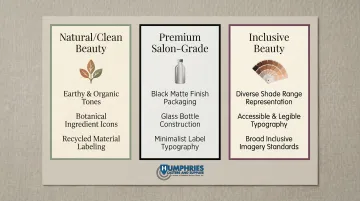
- Natural/clean beauty brands use recycled materials, earthy tones, and botanical typography to reinforce ingredient transparency
- Premium salon-grade brands use weighted glass, matte black finishes, and minimalist labeling to signal professional-quality formulas
- Inclusive beauty brands feature diverse imagery, accessible fonts, and broad color ranges that speak to underrepresented audiences
A CalPoly study found a significant relationship between packaging, cost, and perceived quality — consumers could identify a product's retail tier from primary packaging alone, and almost every product chosen as "superior" was also estimated to be the higher-cost option.
Modern consumers make purchase decisions based on brand alignment — they want products that reflect their values. 63% of US consumers consider clean beauty extremely or very important when selecting cosmetics, and 49% are paying more attention to product sustainability, including packaging.
When packaging reinforces brand identity consistently across purchases, it builds recognition and loyalty. Each interaction strengthens the mental association between your visual identity and the product experience, driving repeat purchases.
KPIs impacted:
- Brand recall
- Customer lifetime value
- Average order value
- Repeat purchase rate
When this advantage matters most:
This advantage is critical when entering premium or prestige price tiers, competing against established national brands, or building a brand story around a specific ingredient ritual or consumer community.
Advantage 3: Social Shareability and Unboxing as a Growth Channel
Distinctive packaging that creates a memorable unboxing moment gets photographed, shared, and saved — converting customers into unpaid brand advocates across Instagram, TikTok, and Pinterest.
How custom packaging creates this advantage:
Design details transform standard delivery into a shareable brand moment:
- Stands out in flat-lay photos with structural bottle shapes designed for visual impact
- Elevates the unboxing experience with gift-ready details like tissue wrapping and inner lid printing
- Aligns color palettes and typography with popular visual trends for inherently photogenic aesthetics
- Creates cohesive, shareable content with coordinated SKU families that look polished on shelves and in posts
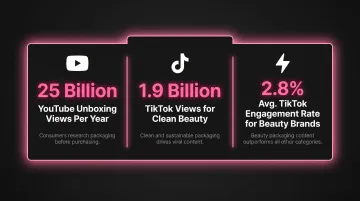
YouTube unboxing videos generated over 25 billion views in a single year, with 62% of viewers watching because they planned to purchase the product. The clean beauty movement alone has amassed over 1.9 billion TikTok views and 6.1 billion Instagram tags.
Organic user-generated content driven by memorable packaging reduces paid acquisition costs and builds social proof that advertising cannot replicate. Each share reaches new, warm audiences with built-in trust. Beauty brands average 2.8% TikTok engagement rates and 229,000 video views per post, creating compounding earned media value.
KPIs impacted:
- User-generated content volume
- Earned media value
- Social follower growth
- Referral traffic
- Cost per acquisition
When this advantage matters most:
This advantage is highest when targeting social-native demographics (Gen Z, millennial beauty enthusiasts), operating a D2C subscription model where unboxing is a regular touchpoint, or running limited-edition seasonal drops designed to create FOMO.
What Happens When Custom Packaging Is Overlooked
Skipping custom packaging doesn't just limit your visual appeal — it actively works against you in three compounding ways:
- Price wars erode your margins: Generic packaging makes brands visually indistinguishable on shelf. Without differentiation, the lowest-cost product wins. Loyalty becomes nearly impossible to build when consumers have no visual reason to choose you.
- New SKUs dilute instead of reinforce: Every product added to a visually inconsistent line signals low investment to consumers. Moving upmarket — or commanding premium pricing — requires packaging that reflects the value you're actually delivering.
- Organic amplification never kicks in: Generic packaging is rarely shared. Brands with distinctive packaging earn free social reach through customer photos and unboxing content. Without it, you rely solely on paid acquisition while competitors compound their organic presence.
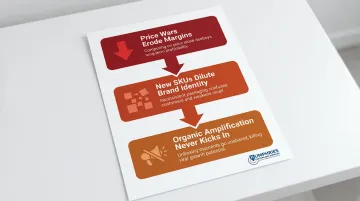
These aren't isolated disadvantages. Each one feeds the next — pushing you further from premium positioning and closer to commodity status.
How to Get the Most Value from Custom Hair Care Packaging
Consistency across your entire product line matters more than most brands expect. A single hero SKU with custom packaging surrounded by generic line extensions sends a mixed signal. Every product in the line should speak the same brand language through shape, color, finish, and typography — that repetition is what builds recognition at shelf and online.
Packaging also needs to evolve as your positioning does. A system that fit your startup's early identity may underperform once you enter new channels or price tiers. Build in periodic packaging audits as you scale — what works for direct-to-consumer doesn't always translate to retail shelf presence.
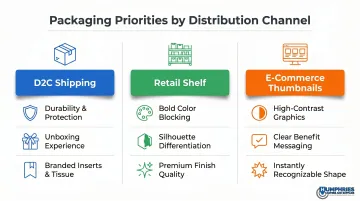
Channel strategy should drive packaging decisions from the start. The requirements for D2C shipping, retail shelf visibility, and e-commerce thumbnail impact pull in different directions. Custom packaging can serve all three when planned from the outset. Consider:
- D2C shipping: Durability, unboxing experience, branded inserts
- Retail shelf: Color blocking, silhouette differentiation, finish quality
- E-commerce thumbnails: High-contrast graphics, clear benefit messaging, recognizable shape
Getting this right early means you won't have to re-engineer packaging every time your distribution strategy shifts.
Conclusion
Custom hair care packaging earns its place in every stage of brand growth — from launch through expansion. In a saturated market, it drives attention, builds consumer trust, and supports the pricing power brands need to compete.
With 73% of purchases decided at the point of sale and consumer attention measured in seconds, packaging does more selling than most brands realize. Treating it as an ongoing investment — not a one-time production decision — is what separates brands that plateau from those that grow their shelf presence, repeat purchase rates, and long-term market share.
Frequently Asked Questions
What makes hair care packaging "custom" versus generic stock packaging?
Custom packaging is designed and specified to reflect a brand's unique identity—covering shape, material, color palette, finish, and label design. Stock packaging is pre-manufactured in standard formats available to any brand, offering no differentiation beyond a basic label swap.
How much does custom hair care packaging typically cost compared to standard options?
Custom cosmetic packaging ranges from $0.50 per unit for basic stock containers to $5.00+ for luxury custom designs, with per-unit costs dropping at scale. Minimum order quantities vary widely: labels and cartons start around 1,000 units, while custom molds typically require 10,000+.
Can small or indie hair care brands afford to invest in custom packaging?
Many packaging suppliers offer scalable options that make differentiation accessible at early stages. Semi-custom decoration on stock shapes, custom labels with premium finishes, or phased customization as volume grows allow emerging brands to compete visually without committing to full custom tooling immediately.
How does sustainable or eco-friendly packaging affect brand perception in hair care?
Sustainable packaging strongly resonates with modern consumers. 81% of shoppers believe brands should actively reduce plastic packaging, and 47% are willing to pay more for sustainable options. Recycled materials, refillable formats, and biodegradable components serve as brand differentiators in themselves, particularly with Gen Z and millennial buyers.
What design elements have the most impact on hair care packaging performance?
The highest-impact elements include:
- Color palette and contrast — drives shelf visibility at a glance
- Material and finish — signals tactile quality before the product is touched
- Label hierarchy — communicates key benefits quickly and clearly
- Structural shape — creates distinctiveness and memorability
Each element should align with your brand positioning and target customer expectations.
How long does it typically take to develop and produce custom hair care packaging?
Timelines depend on complexity. Simple label customization takes 7-15 days; custom-molded bottles or structural designs run 25-45 days after design lock. Full OEM cycles (formula plus packaging) typically require 8-12 weeks, and complex molds at least three months from concept to production.