Every wheel you fit on a cart, trolley, or hand truck is more than just a spinning part; it can shape how smoothly, reliably, or safely you move loads. When it comes to choosing between wheels, a lot rides on your decision: from load-bearing performance and floor protection to noise levels, chemical resistance, and long-term durability.
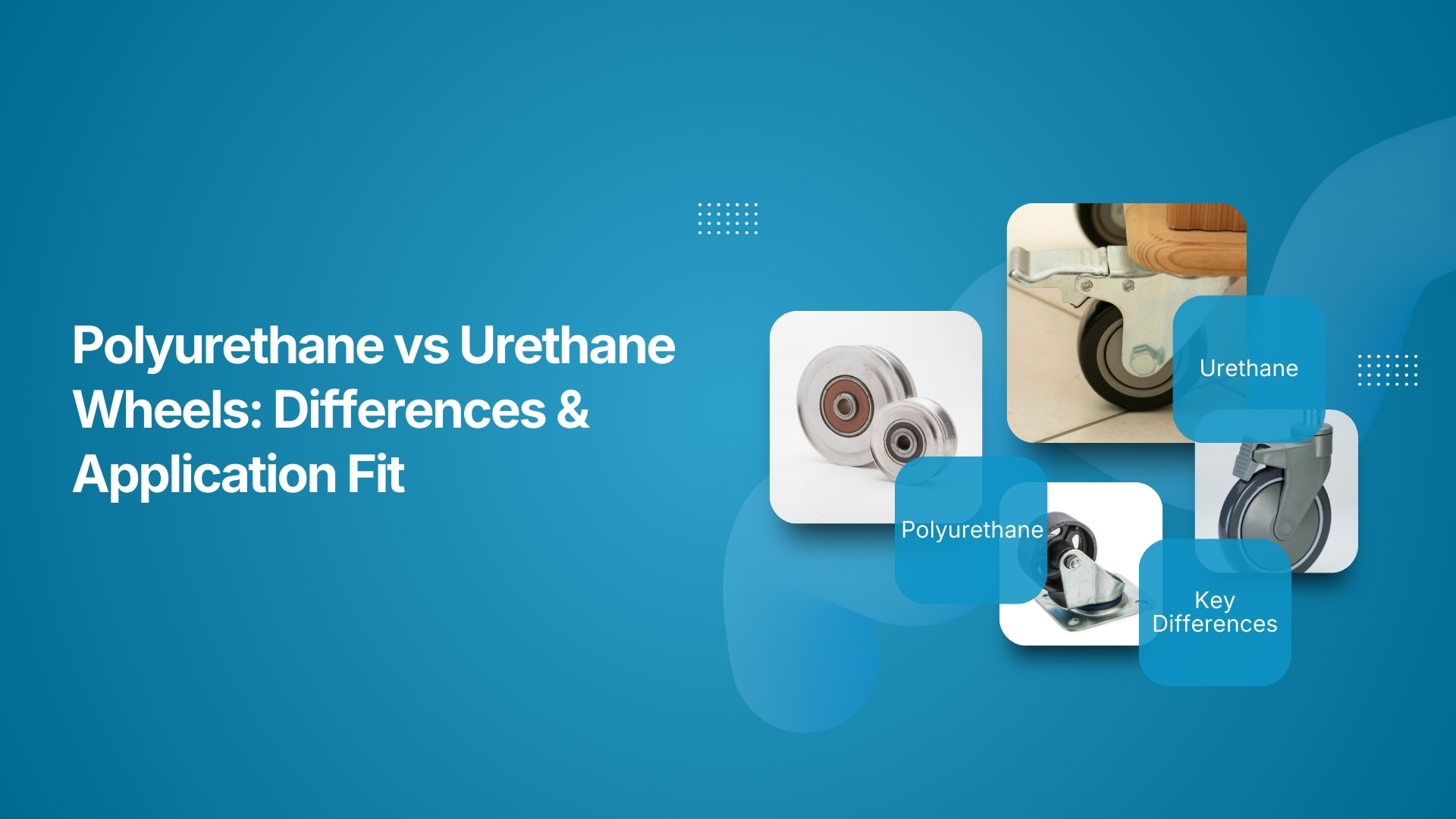
This guide helps operations managers, procurement specialists, and facilities teams cut through marketing jargon. So let’s break down the real differences between polyurethane vs urethane wheels and how to choose the right material with confidence.
Key Takeaways:
Material Difference Matters: Polyurethane vs urethane wheels perform differently in real applications despite similar chemistry.
Load & Durability: Polyurethane handles heavier loads and resists abrasion and chemicals for long industrial use.
Speed & Agility: Urethane offers lower rolling resistance and better elasticity for automation and fast movement.
Environment Fit: Polyurethane excels on smooth indoor floors and washdown areas; urethane performs best across temperature swings and varied surfaces.
Cost Efficiency: Choosing the right polyurethane vs urethane wheels reduces downtime, strain, and long-term operating costs.
Expert Guidance: Humphries Casters provides tailored recommendations, OEM equivalents, and bulk supply support.
A Quick Look at Both Materials
Before comparing performance and applications, you need a clear understanding of what each material actually is. This section gives you a straightforward snapshot of polyurethane vs urethane wheels: how they’re formulated, how they behave mechanically, and the environments they’re engineered to handle.
Let’s start with polyurethane wheels and what sets them apart.
What Are Polyurethane Wheels?
Polyurethane wheels are manufactured from a high-performance engineered polymer designed to deliver a combination of durability, elasticity, and floor protection. You’ll typically see them used on carts, hand trucks, trolleys, conveyors, and industrial equipment where heavy loads need to move smoothly without damaging the flooring.
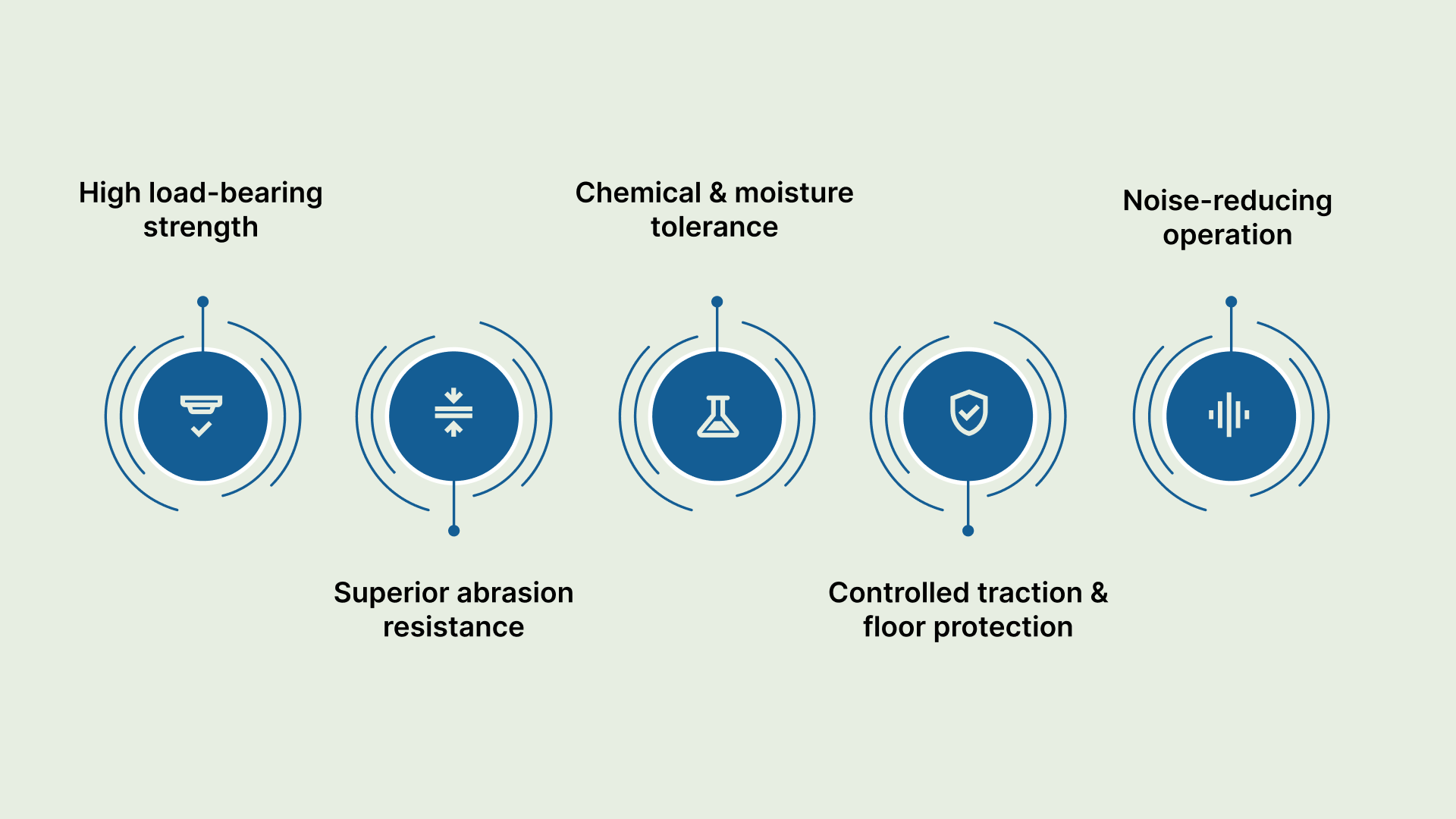
Unlike harder plastics or metals, polyurethane provides controlled cushioning and high tear and abrasion resistance, making it suitable for high-cycle and high-impact material handling environments.
Key Traits
High load-bearing strength — supports heavy weights without deforming, maintaining consistent rolling performance under pressure.
Superior abrasion resistance — withstands scraping and floor friction, extending wheel lifespan in high-cycle industrial use.
Chemical and moisture tolerance — performs reliably in environments exposed to oils, solvents, and washdown processes without swelling or breakdown.
Controlled traction and floor protection — grips surfaces without marking or causing surface wear, ideal for polished concrete, epoxy floors, and coated surfaces.
Noise-reducing operation — minimizes wheel vibration and sound levels, supporting quieter workflows in hospitals, warehouses, and production lines.
What Are Urethane Wheels?
Urethane wheels are produced from a versatile elastomer derived from urethane chemistry, engineered to offer higher elasticity and flexibility than standard polyurethane formulations. You’ll typically see urethane wheels used in applications requiring precision movement, reduced rolling resistance, and performance consistency across varying speeds and temperatures.
Because of their softer, more elastic composition, urethane wheels deliver responsive handling and controlled elasticity that perform well in dynamic, fast-paced environments.
Key Traits
Greater rebound and flexibility — adapts to changes in speed and surface texture for smoother starts, stops, and directional transitions.
Enhanced cut and tear resistance — maintains structural integrity under sharp edge impact or rough handling.
Lower rolling resistance — requires less force to move loads, improving operator control and reducing strain during continuous operation.
Temperature performance stability — resists hardening, softening, or cracking across wider temperature ranges common in cold storage or heat-exposed operations.
Precision handling — supports applications where controlled movement and maneuverability are critical, such as robotic automation and conveyor systems.
Now that you understand how each material is built and where it’s typically used, it’s easier to compare how they perform under real operational conditions.
Polyurethane vs Urethane Wheels: Key Differences
While polyurethane and urethane share a chemical foundation, their mechanical behavior, durability response, and handling characteristics differ in ways that directly affect productivity, safety, and equipment longevity.
The comparison below highlights the most practical distinctions to help you choose the right material for your workload and environment.
Performance Factor | Polyurethane Wheels | Urethane Wheels |
Load Capacity | Handles heavier loads without compression or deformation. | Better suited for moderate to high loads requiring agility rather than maximum weight. |
Rolling Resistance | Slightly higher resistance due to denser structure. | Lower resistance requires less effort to move equipment continuously. |
Abrasion & Floor Wear | Exceptional abrasion resistance for long life on abrasive surfaces. | Softer elasticity increases surface contact but can wear faster under harsh friction. |
Temperature Stability | Performs best in stable indoor temperatures. | Maintains elasticity in cold storage or variable heat environments. |
Chemical Exposure | Strong resistance to oils, solvents, and washdown chemicals. | Performs well but may not match polyurethane’s chemical durability in aggressive conditions. |
Cut & Tear Strength | More vulnerable to cutting impact from sharp edges. | Higher tear resistance for rough loading and docking operations. |
Noise & Vibration | Quieter rolling with vibration damping beneficial for hospitals & clean spaces. | Smooth rolling feel but can transmit more vibration under heavy impact. |
Floor Type Compatibility | Ideal for polished concrete, epoxy floors, and delicate surfaces. | Ideal for mixed floor surfaces and routes with transitions and speed variation. |
Best Application Fit | Warehousing, heavy carts, production equipment, food washdowns. | Conveyor systems, robotics, automated handling, cold storage, fast-paced logistics. |
Understanding the differences between polyurethane and urethane is only useful if it helps you make the right material choice for real operating conditions.
How to Choose the Right Wheel Material?
The best wheel isn’t determined by chemistry alone; it’s determined by how, where, and how often your equipment moves, and what performance outcomes matter most to your operation.

Use the decision guidelines below to match wheel material to workload, environment, and long-term efficiency goals.
1. Consider Your Load Type and Weight Requirements
If you regularly move heavy equipment, dense pallets, industrial tooling, or stacked loads, polyurethane handles higher weights without deformation. Urethane is better if you prioritize maneuverability and responsive movement for moderate loads, especially across varying speeds.
2. Evaluate Your Floor and Route Conditions
Smooth warehouse floors, epoxy-coated surfaces, and environments sensitive to marking or abrasion typically benefit from polyurethane wheels. Urethane performs better when routes involve speed changes, ramps, transitions, or mixed floor textures requiring agile handling.
3. Assess Environmental Exposure
Polyurethane excels in environments with chemicals, oils, solvents, or washdown sanitation routines, such as food production and pharmaceutical facilities. Urethane maintains elasticity and wheel integrity in temperature-sensitive workplaces like freezers, coolers, and heat-variable manufacturing lines.
4. Factor in Usage Frequency and Operation Speed
For high-cycle, repetitive movement where wheels run continuously, polyurethane provides durability and long service life. Urethane is the stronger choice for operations involving fast movement, automated conveyors, or robotics requiring precision handling.
5. Look at Total Cost of Use, Not Just Purchase Price
When deciding between polyurethane vs urethane wheels, consider downtime, maintenance, operator fatigue, and floor protection. A wheel that lasts longer and reduces strain may deliver far greater ROI than the cheapest initial option.
Choosing the right wheel material is only part of the decision. Partnering with a supplier who understands the operational demands behind that choice is what ensures long-term performance and ROI.
Where Humphries Casters Comes In
Selecting between polyurethane and urethane wheels becomes much easier when you have expert guidance grounded in real operational needs. Humphries Caster specializes in helping facilities choose wheel materials that match load demands, environmental conditions, floor surfaces, and long-term cost strategies.
What You Can Expect From Humphries Casters
Material-specific recommendations based on load type, terrain, speed cycles, sanitation requirements, and usage frequency.
Extensive wheel selection, including polyurethane, urethane, and specialty compounds engineered for harsh or regulated environments.
OEM-equivalent and custom-manufactured options to ensure compatibility and eliminate modification delays.
Bulk and scheduled purchasing programs for multi-location facilities, warehouses, and high-cycle operations.
Proven expertise across industries, including hospitals, food-processing, distribution centers, assembly lines, and transport logistics.
Reliable sourcing partnerships with access to hundreds of manufacturing facilities for rapid fulfillment and application testing.
From equipment upgrades to resolving persistent wheel issues, Humphries Casters helps you make confident decisions that improve performance and long-term efficiency.
Conclusion
The real question isn’t whether polyurethane or urethane is “better,” but which performs best in the conditions your equipment faces every day.
Suppose you want support selecting the best material fit for your operation: backed by experience, application knowledge, and access to a wide supplier network. In that case, Humphries Casters can help guide you through the process with confidence.
Have questions or need assistance choosing between polyurethane vs urethane wheels? Reach out to us for expert recommendations tailored to your environment and performance goals.
FAQs
1. Are polyurethane vs urethane wheels interchangeable on existing equipment?
Yes, but only if axle size, hub width, and load rating match your current setup. Before swapping polyurethane vs urethane wheels, confirm compatibility specifications to avoid alignment issues and premature bearing wear.
2. Which material performs better for high-speed automation or conveyor systems?
For continuous movement at variable speeds, urethane often performs better due to its elasticity and lower rolling resistance. When evaluating polyurethane vs urethane wheels for automation, consider startup torque, acceleration response, and noise thresholds.
3. Do polyurethane vs urethane wheels affect floor safety or slip control?
Yes—polyurethane typically provides superior traction and floor protection on polished or coated surfaces, reducing slip hazards. When choosing polyurethane vs urethane wheels, factor in floor type and surface finish to prevent skidding or marking.
4. Which wheel type handles sudden impact or shock loading more effectively?
Urethane usually withstands sharp impact and edge contact more reliably due to higher tear resistance. In decisions involving polyurethane vs urethane wheels, environments with docking impacts, curb transitions, or dropped loads may favor urethane.
5. How do temperature extremes influence performance differences between polyurethane vs urethane wheels?
Urethane maintains flexibility and structural integrity in freezers, coolers, and heat-variable operations, while polyurethane performs best in stable indoor climates. Always compare temperature ratings before selecting polyurethane vs urethane wheels for temperature-sensitive environments.
6. Which material has a longer lifespan under heavy industrial use?
In high-weight, repetitive applications, polyurethane typically lasts longer thanks to superior abrasion resistance. When deciding on polyurethane vs urethane wheels, choose polyurethane for sustained high loads and urethane for dynamic movement.