Your vehicle might be running fine. The suspension feels solid. The tires look good. But when the steering wheel fights you on every straightaway or refuses to return after a turn naturally, it raises that frustrating question: What’s going on with my steering?
Often, the answer isn’t your tires or even your suspension components. It’s your caster alignment.
Caster doesn’t get talked about as much as camber or toe because it doesn’t wear out your tires. But if it’s off, you feel it in every lane change, every curve, every long drive on the highway.
In this guide, we’ll walk you through what caster alignment really does, how to tell if it needs adjusting, and how to safely adjust the caster at home (if your vehicle allows it). Because driving should feel confident, not like a tug-of-war with the steering wheel.
Need to know
Caster alignment directly affects steering stability, return-to-center response, and highway control.
Most modern vehicles use positive caster, typically within +3° to +5°, to enhance driving confidence.
An incorrect caster is usually felt through handling issues, not visible tire wear.
Adjustment methods depend on suspension design; some vehicles require aftermarket hardware.
Accurate measurement, small incremental changes, and proper torqueing are essential for safe results.
If caster cannot be set within specification or handling issues persist, a professional alignment is recommended.
What Is Caster Alignment?
Caster refers to the angle of the steering axis, viewed from the side of the vehicle. This axis runs through the upper and lower pivot points of the front suspension, such as the ball joints or strut mounts.
There are two primary directions:
Positive caster: The top of the steering axis leans toward the driver. This improves straight-line stability and helps the steering wheel return to center after a turn.
Negative caster: The top of the steering axis leans forward. Steering becomes lighter but less stable, especially at higher speeds.
Most modern passenger vehicles are set to run with positive caster, typically in the range of +3° to +5°, to maintain better control and driving comfort.
Caster does not typically influence tire wear directly. Instead, it influences how a vehicle behaves on the road, particularly in terms of stability and steering response.
Why Caster Alignment Matters?
Caster alignment directly influences how stable and predictable a vehicle feels on the road. While it does not impact tire wear like camber or toe, it controls how well a vehicle tracks in a straight line and how confidently the steering responds during turns or lane changes.
Key benefits of properly set caster:
Improved straight-line stability
Natural and smooth return-to-center after cornering
Better high-speed steering control
Reduced driver fatigue from constant corrections
More consistent handling during lane changes and braking
When caster falls outside the recommended range, these stability and steering qualities begin to decline, which leads to noticeable driving symptoms.
5 Signs Your Caster May Be Out of Specification
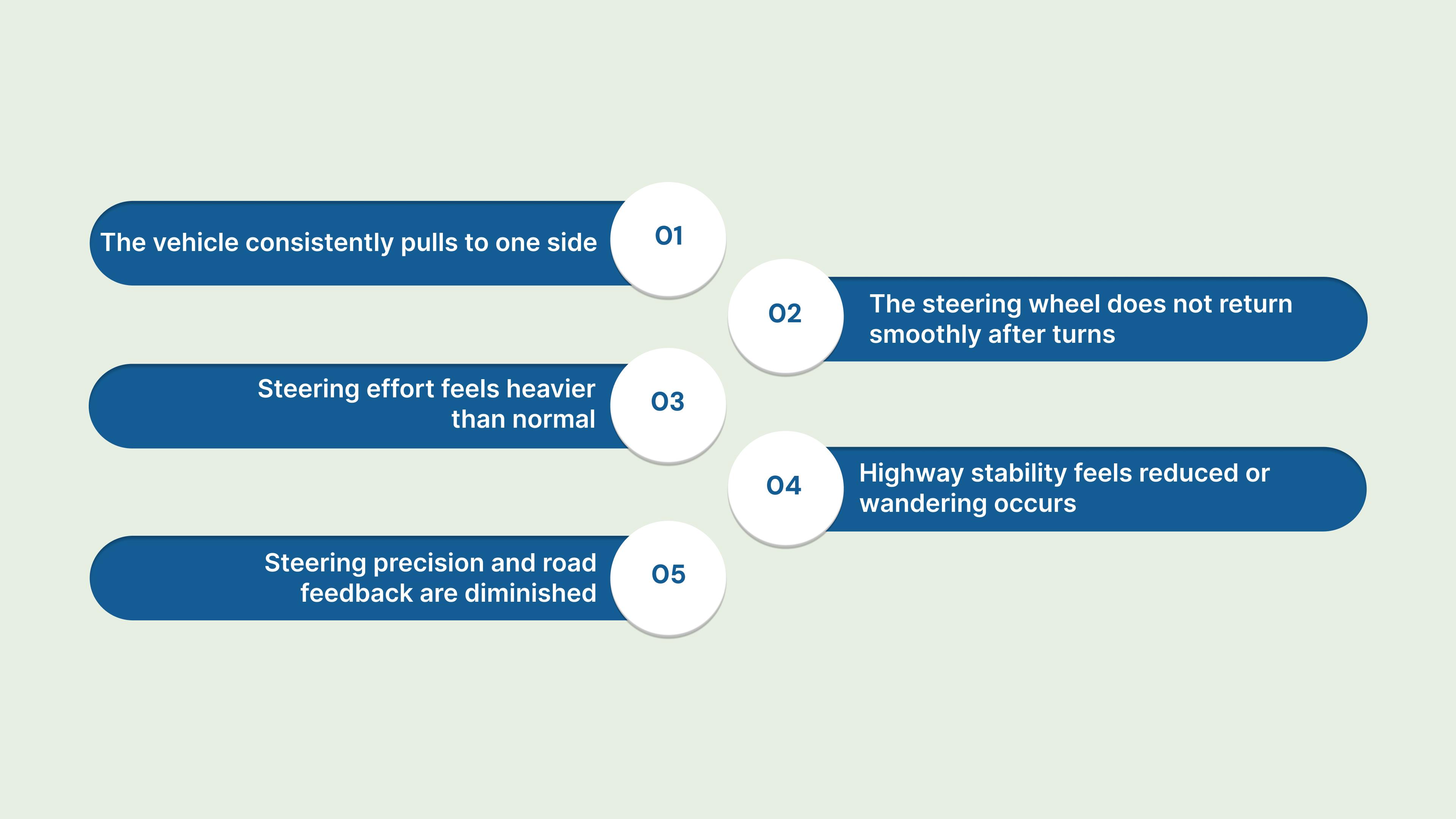
Caster problems typically affect how the vehicle steers and handles, not how the tires look. When the caster angle is outside the manufacturer’s specification, the vehicle will show clear changes in steering behavior.
Here are the common indicators to watch for:
1. The vehicle consistently pulls to one side
If one wheel has less positive caster than the other, the vehicle will drift toward that side. Drivers often find themselves holding the steering wheel slightly off-center to maintain a straight path, especially on the highway.
2. The steering wheel does not return smoothly after turns
Positive caster helps the wheels straighten automatically once you exit a corner. When caster is too low, the wheel feels slow or hesitant to come back to center, requiring extra effort from the driver.
3. Steering effort feels heavier than normal
Excessively high positive caster increases resistance in the steering system. This is especially noticeable during low-speed maneuvers such as parking or tight turns, creating unnecessary strain and fatigue.
4. Highway stability feels reduced or wandering occurs
Negative or insufficient caster causes the front wheels to lose directional authority. The result is a “floaty” or wandering sensation that requires constant micro-corrections to stay in your lane.
5. Steering precision and road feedback are diminished
With incorrect caster, the steering response becomes less sharp, making the vehicle feel less predictable during quick lane changes or avoidance maneuvers. Drivers may sense delayed feedback from the road surface.
When these steering issues begin to appear, the next step is to determine whether your vehicle actually allows caster adjustments and what type of suspension system you’re working with.
Upgrade your alignment hardware with trusted caster solutions from Humphries Casters. Contact us to get the right fit for your vehicle.
Can Every Vehicle’s Caster Be Adjusted?
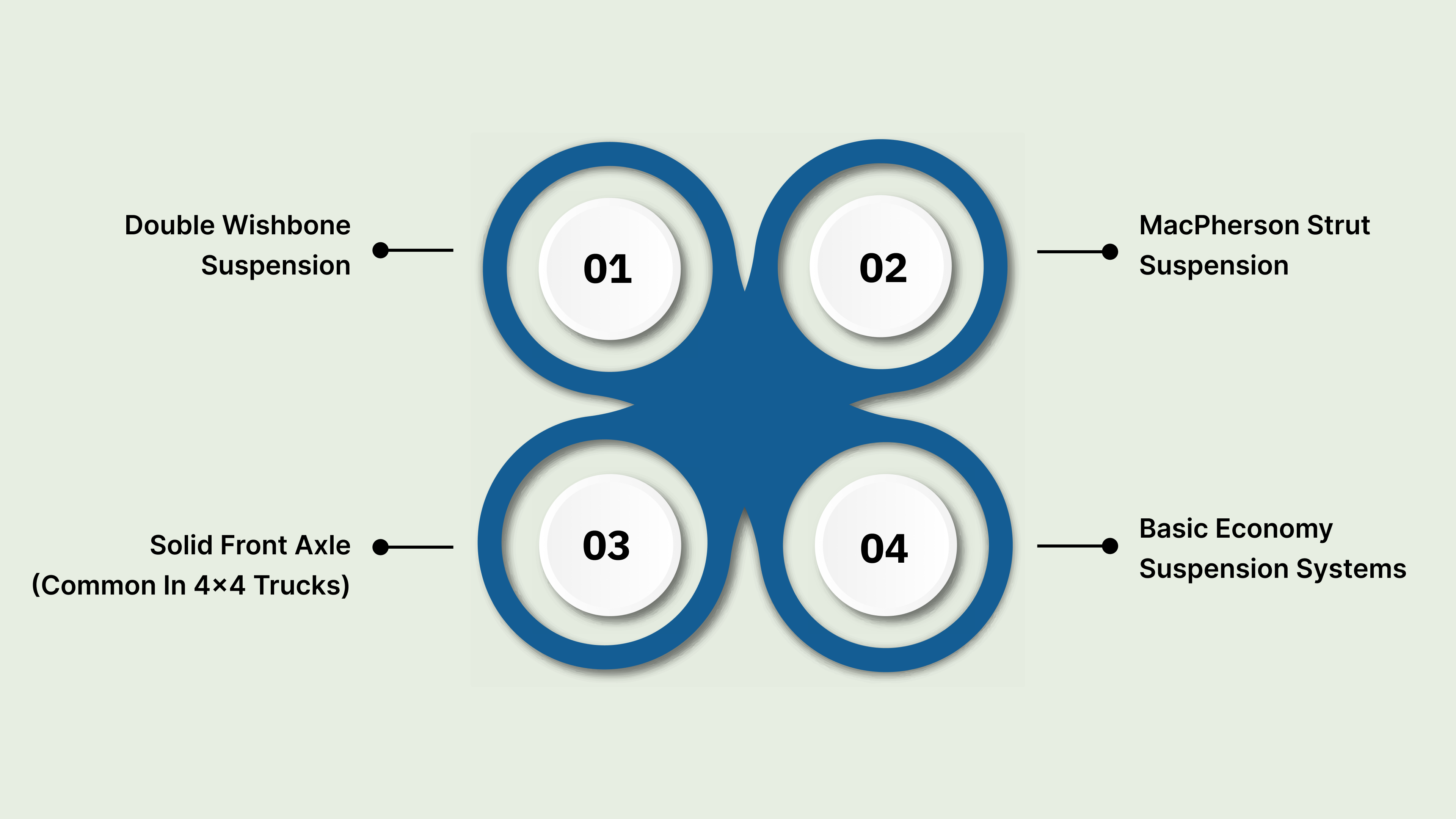
Caster adjustability depends on the suspension design used by the manufacturer. Some vehicles include built-in adjustment points, while others maintain a fixed geometry that cannot be altered without aftermarket modification. Understanding your suspension type is essential before attempting any DIY caster correction.
Below is a general guide to how caster adjustment varies across common suspension setups:
Double Wishbone Suspension: This design typically includes adjustable control arms or shims, making caster correction straightforward. Adjustability is one of the reasons it’s favored in many trucks and performance vehicles.
MacPherson Strut Suspension: Many modern passenger vehicles use this setup, which may or may not support caster adjustment from the factory. Where adjustment is possible, it is often done through tension rods or offset strut mounts.
Solid Front Axle (Common in 4x4 Trucks): Caster can usually be adjusted using radius arm adjustments or caster correction wedges. Lifted trucks often require caster adjustments to restore stability after altering ride height.
Basic Economy Suspension Systems: Some entry-level vehicles have fixed caster geometry. In these cases, aftermarket components such as adjustable bushings or control arms are required to introduce caster correction capability.
Knowing whether caster can be adjusted on your specific vehicle helps ensure the right tools, hardware, and expectations are in place before starting the job.
Tools Required for DIY Caster Adjustment
Accurate measurements and stable vehicle support are essential for proper caster adjustment. Before beginning, ensure you have the equipment needed to measure angles, safely lift the vehicle, and secure suspension components to specification.
Below is a list of recommended tools and their purposes:
Tool / Equipment | Purpose |
Caster/Camber Gauge | Measures caster angle accurately during wheel rotation |
Turn Plates or Smooth Metal Sheets | Allows wheels to rotate smoothly to specific angles when measuring |
Floor Jack | Lifts the vehicle to access suspension components |
Jack Stands | Provides secure support while working under the vehicle |
Wheel Chocks | Prevents accidental vehicle movement while lifted |
Socket and Wrench Set | Loosens and tightens suspension fasteners |
Torque Wrench | Ensures bolts and nuts are tightened to factory specification |
Flat and Level Work Area | Ensures accurate angle readings and proper suspension setup |
Vehicle Service Manual | Provides OEM caster specifications and torque values |
Having the correct equipment ready ensures that measurements are accurate and adjustments can be completed safely. Once the workspace is prepared, you can begin the alignment process.
How to Adjust Caster at Home: Step-by-Step
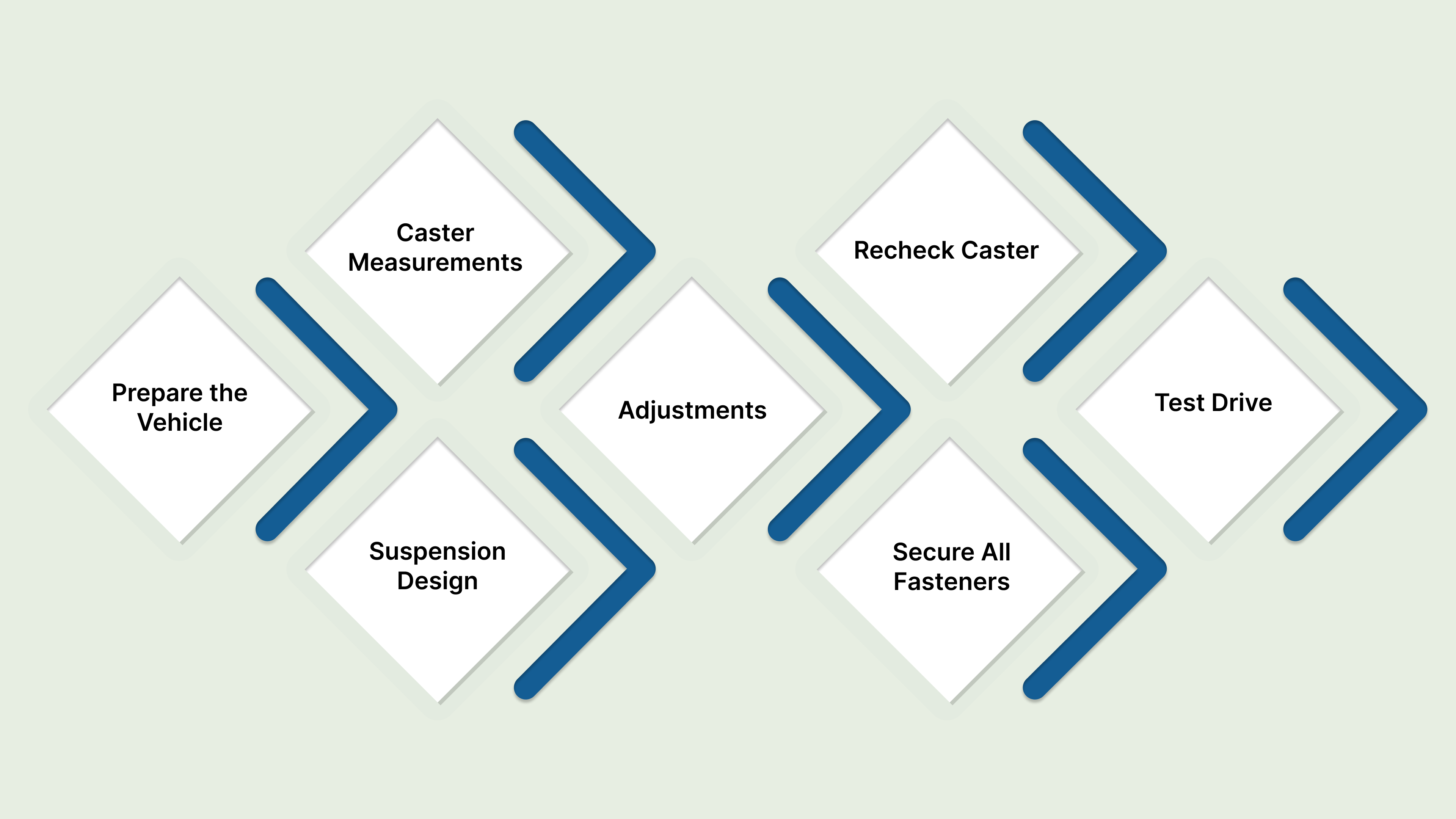
Adjusting caster requires patience and careful measurement. Making small, incremental adjustments and rechecking angles throughout the process is essential for achieving the correct specification on both sides of the vehicle.
Follow the steps below to complete a proper caster adjustment:
Prepare the Vehicle and Work Area: Park on a level surface and confirm tire pressures match manufacturer recommendations. Lock the steering wheel straight ahead and settle the suspension by pressing down and releasing several times. This establishes a consistent baseline before measuring.
Take Initial Caster Measurements: Attach the caster gauge securely to the wheel hub or brake rotor. Rotate the wheels outward by a measured amount (commonly 20°) and zero the gauge. Then rotate inward by the same amount and record the reading. Repeat the process on both sides and compare the results to the vehicle specifications.
Perform the Adjustment According to Suspension Design Each suspension type uses a different adjustment method:
Double Wishbone: Adjust the position of the lower control arm using shims or eccentric bolts to increase or decrease positive caster.
MacPherson Strut: Use adjustable tension rods or reposition the upper strut mount if an adjustable version is installed.
Solid Front Axle (Trucks/4x4s): Modify caster through radius arm adjustments or by installing caster correction wedges, especially after a lift.
All adjustments should be made gradually. Even small changes in pivot point position can shift caster significantly.
Recheck Caster, Camber, and Toe Measurements: After each adjustment, remeasure caster and confirm the left and right sides are balanced. Changes in caster may influence camber and toe, so verify these angles remain within specification as well.
Secure All Fasteners and Confirm Proper Torque: Once the correct angles are achieved, tighten all bolts, nuts, and alignment hardware to manufacturer torque requirements. This ensures adjustments remain stable during operation.
Test Drive and Evaluate Steering Response: Conduct a controlled road test to verify improvements in straight-line tracking, steering return, and overall stability. If handling issues persist, additional fine-tuning or component inspection may be necessary.
Need help choosing the right caster components? Get in touch with Humphries Casters for expert guidance and reliable alignment products.
Common Caster Adjustment Issues and How to Resolve Them
Even after adjustments, steering or stability issues may still appear if caster angles are not balanced or if other suspension components are affecting alignment. Identifying the specific symptom helps determine whether further correction or component inspection is needed.
Common troubleshooting scenarios include:
Improper Pull Direction: If the vehicle continues to drift left or right, there may still be an imbalance in caster angles between the front wheels. Matching positive caster values side-to-side more closely typically resolves this issue.
Heavy or Stiff Steering Feel: Excessive positive caster increases steering effort, particularly at low speeds or during parking. Reducing caster slightly can restore easier and more comfortable steering operation.
Highway Instability or Wandering: Insufficient positive caster can lead to reduced directional control at speed. Increasing caster helps stabilize on-center feel and improve lane-keeping.
Slow Steering Wheel Return: When the wheel does not naturally return to center after cornering, positive caster is likely too low. Additional caster improves the self-centering effect.
Ongoing Handling Problems After Adjustment: If symptoms persist despite correct caster settings, underlying mechanical issues, such as worn bushings, bent control arms, or braking drag, should be inspected, as alignment alone cannot correct structural wear.
When Professional Alignment Is Recommended
There are situations where precise caster adjustment requires professional alignment equipment. If the angles cannot be set within the recommended range or handling issues persist after adjustment, a qualified alignment shop should be involved. This is especially important when:
The suspension does not include factory caster adjustment points
Ride height changes have altered suspension geometry
Steering instability continues after multiple corrections
There are signs of worn, bent, or damaged suspension components
A professional alignment service like Humphries Casters can diagnose issues more accurately and ensure the vehicle meets safety and performance standards.
How Humphries Casters Can Support Your Alignment Needs
When adjustments alone are not enough, quality hardware becomes essential. Humphries Casters offers caster correction components and suspension solutions designed to deliver accurate alignment results, whether the work is done at home or by a technician.
Our products can help with:
Introducing caster adjustment to vehicles with fixed factory geometry
Restoring proper alignment after lifts or suspension upgrades
Replacing worn components that affect caster angles
Improving long-term steering stability and handling performance
Humphries Casters provides durable, reliable alignment hardware to help ensure your vehicle tracks correctly and remains stable on the road.
Final Takeaway
Proper caster alignment plays a critical role in steering control, stability, and overall driving safety. When caster angles are corrected, the difference is noticeable in every mile you drive. If your current hardware limits adjustment or components need replacement, upgrading the suspension is the best path to long-term results.
Humphries Casters provides reliable caster correction parts designed to support accurate alignment, whether you’re adjusting the vehicle yourself or working with a professional.
If you need guidance selecting the right components for your vehicle, our team is here to help. Contact us today to get the support and parts you need for a safer, more stable drive.
1. What does caster do in a wheel alignment?
Caster affects how stable a vehicle feels on the road and how efficiently the steering wheel returns to center after a turn. Proper caster improves directional control and high-speed stability.
2. How do I know if my caster is off?
Common signs include the vehicle pulling to one side, slow return-to-center steering, heavy steering effort, or instability at higher speeds.
3. Can caster cause tire wear?
Caster does not directly cause uneven tire wear, unlike camber or toe. However, incorrect caster can contribute to handling issues that indirectly affect tread over time.
4. Can I adjust caster at home?
Yes, if your vehicle has built-in caster adjustment points and you have the proper tools. Some suspension types may require aftermarket hardware to make caster changes possible.
5. Is positive or negative caster better?
Most modern vehicles run positive caster for improved straight-line tracking and steering feel. Negative caster typically results in reduced stability and is not recommended.
6. When should I seek professional caster adjustment?
Professional alignment is recommended when caster cannot be corrected to specification, when the vehicle has fixed suspension geometry, or when worn components are affecting alignment.