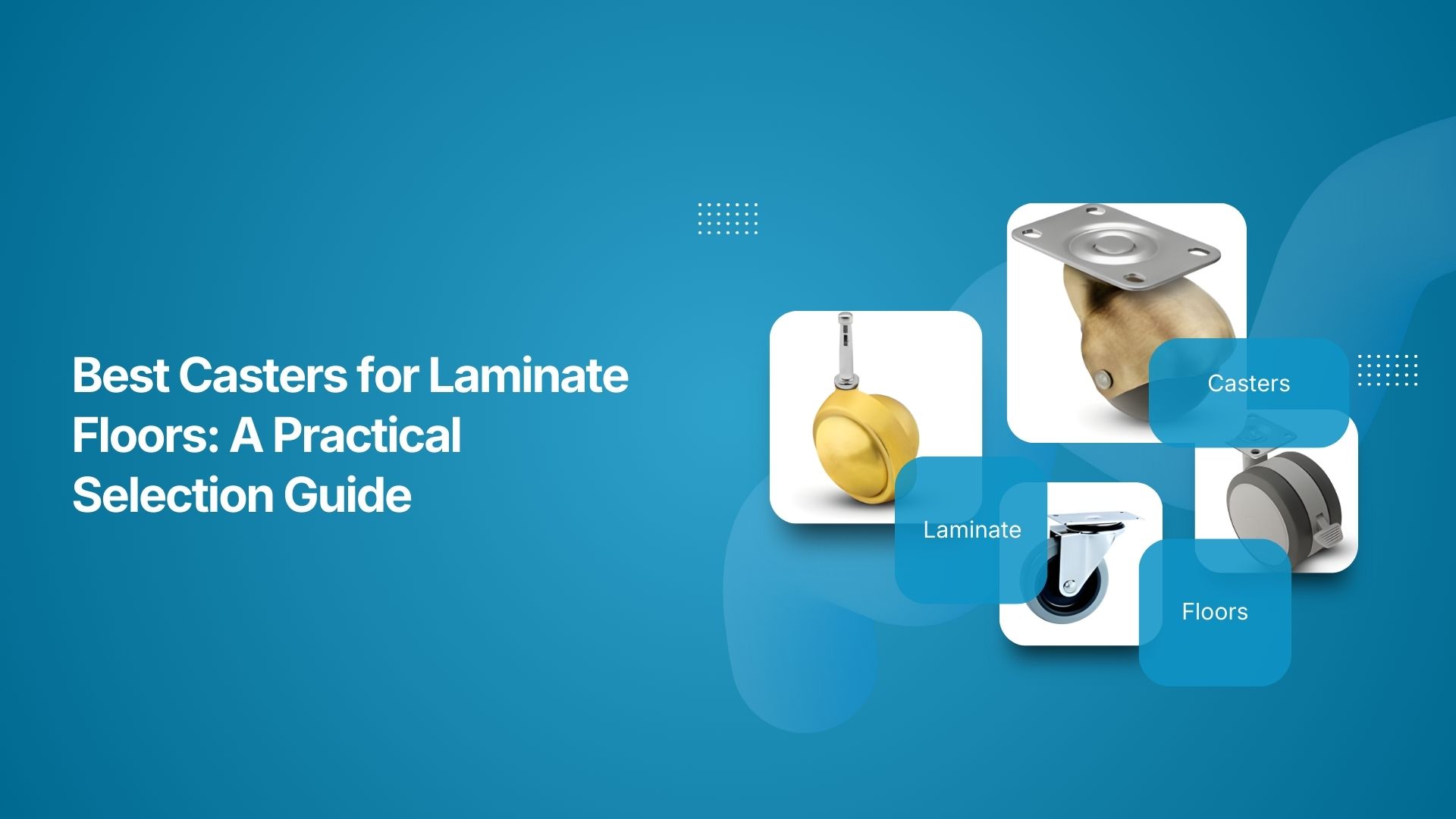
Laminate floors look great: clean lines, glossy finish, easy maintenance. But pair them with the wrong caster wheels, and you suddenly have scratches, dents, noise, and floor damage you didn’t anticipate.
That’s why when you read “best casters for laminate floors,” what you’re really asking is: “How do I move furniture, chairs, or carts smoothly, without ruining my floor?”
In this guide, you’ll learn how to choose laminate-safe casters and avoid the common mistakes that lead to floor damage and rough movement.
At a Glance:
Soft, non-marking wheels matter: The best casters for laminate floors protect against scratches, dents, and noisy rolling.
Material + width count: Choose soft-tread rubber, PU, or TPE with wider or twin-wheel designs for safer weight distribution.
Fitment affects performance: Even the right caster can damage floors if load rating or mount type is mismatched.
Watch for early warning signs: Noise, resistance, dents, or marks mean it’s time to upgrade casters.
Smart upgrades save money: Protecting flooring costs far less than repairing or replacing laminate.
What Makes a Caster “Laminate-Safe”: Key Criteria
Laminate flooring is durable, but not against the wrong wheels. Hard casters like nylon, hard plastic, or metal can scratch the surface, leave dents, cause dull wear patterns, and create loud rolling noise over time. The problem isn’t movement itself; it’s pressure and friction concentrated into a small contact point.
Choosing laminate-safe casters means selecting wheels designed to distribute weight gently, roll smoothly, and protect the floor surface instead of grinding against it.
Here’s what to look for:
Selection Factor | What to Choose | Operational Impact |
Wheel Material | Soft-tread Rubber / PU / TPE | Protects laminate from scratches, scuffs, and surface wear |
Tread Width | Wider tread or twin-wheel design | Distributes load evenly; prevents dents and pressure marks |
Non-Marking Surface | Light-colour, non-marking compound | Avoids streaks, black lines, and floor discoloration |
Wheel Diameter | Medium–large (not small hard wheels) | Rolls smoothly over joints and debris without digging into the floor |
Bearing Quality | Smooth, sealed bearings | Reduces push effort and eliminates noise/shuddering |
Weight Capacity | Rated for real-world load, not just product label | Prevents compression, flat-spotting, and uneven wear |
Mount/Compatibility | Correct stem/plate fit for furniture base | Keeps movement stable and prevents wobble that can damage flooring |
Once you know what makes a caster laminate-safe, the next step is choosing the type that fits your furniture, load, and usage environment.
Types of Casters Best Suited for Laminate Floors
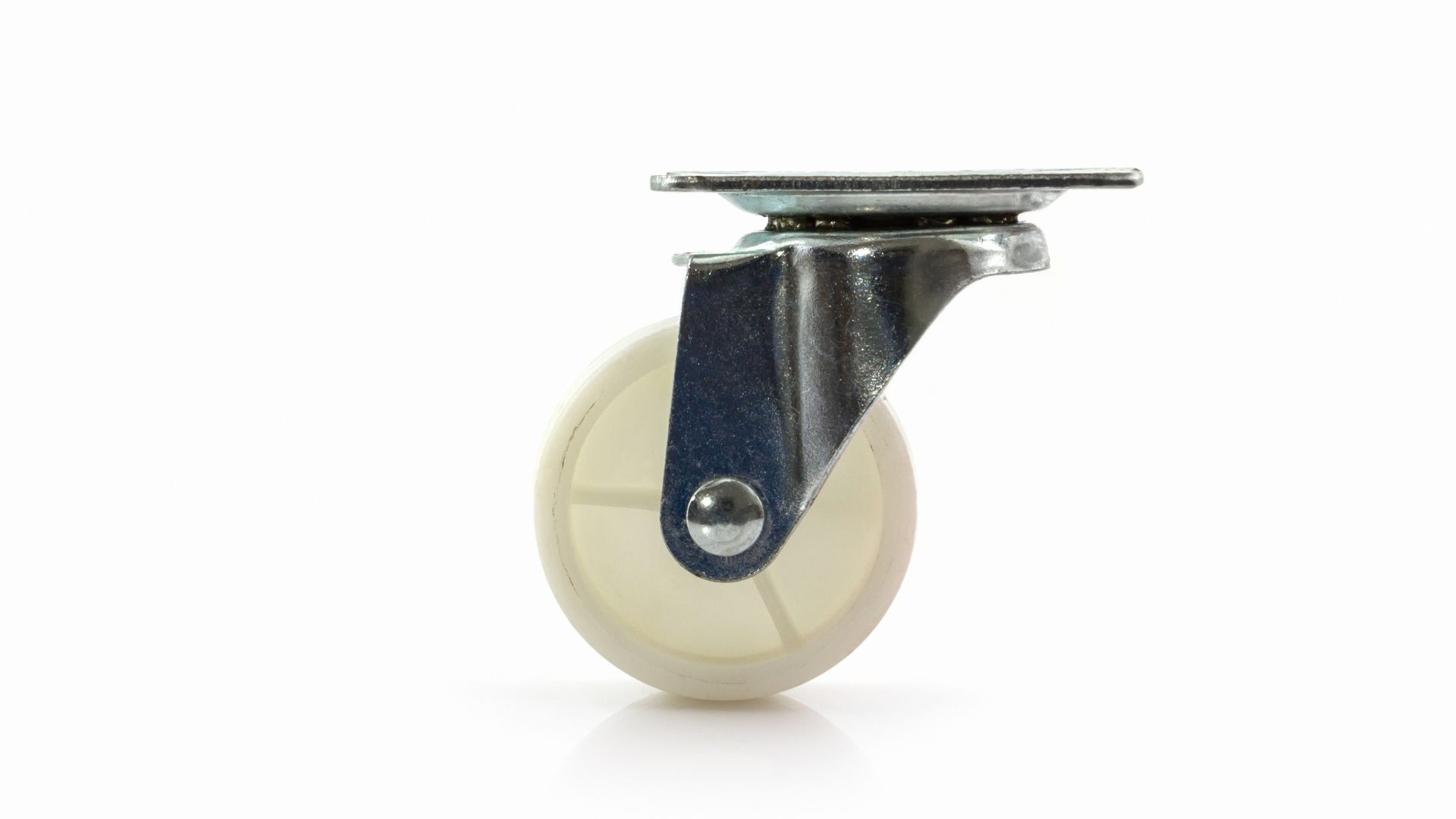
Not all soft casters perform the same; some are ideal for office chairs, others for carts, equipment, or heavy furniture. The right type depends on how often you move it, how much weight it carries, and how important noise and floor protection are.
Here are the options that work best for laminate surfaces:
1. Soft-Tread Rubber Casters
Soft-tread rubber casters use a cushioned wheel surface that compresses slightly under load, creating gentle contact with laminate flooring. They’re built to prevent scratching and surface damage while keeping movement smooth and quiet.
Best suited for
Home or office furniture that moves frequently
Areas requiring silent rolling (meeting rooms, studios, clinics)
Light- to medium-weight loads
Operational advantages
Protects laminate from scratches and scuffs by absorbing impact instead of grinding against the surface
Smooth, quiet rolling — reduces noise transfer common with plastic or nylon wheels
Better traction and control — prevents sliding or skidding that can mark the floor
Soft under pressure — distributes load without leaving dents or compression marks
Considerations/limitations
Not ideal for heavy-duty industrial loads
Requires clean floor surfaces to avoid embedded debris damaging tread
Ideal for
Desks, chairs, shelving units, lightweight carts, workstations, and general indoor furniture where aesthetics and noise control matter
2. Polyurethane (PU) Casters
Polyurethane casters use a soft yet durable tread material that offers strong floor protection with longer wear life than rubber. They balance smooth rolling, quiet operation, and high load capacity, making them a popular choice for laminate and other hard floors.
Best suited for
Office chairs, filing cabinets, mobile workstations, equipment carts
Medium- to heavy-duty loads that need floor protection without sacrificing mobility
Operational advantages
Floor-safe performance — PU compresses slightly on contact, protecting laminate from scratches and pressure lines
Higher durability than rubber — resists cuts and wear from debris or heavy weight
Efficient rolling and steering control — sealed bearings offer smooth movement with less push effort
Low-noise movement — quieter than hard plastic or metal wheels in shared spaces
Considerations/limitations
Can pick up small debris; regular cleaning improves longevity
Rolling may feel firmer than soft rubber for those prioritizing cushioning
Ideal for
Conference rooms, clinics, schools, retail spaces, task chairs, and carts that move often and carry real weight on laminate flooring
3. Twin-Wheel Soft Casters
Twin-wheel casters use two side-by-side soft wheels to spread the load more evenly across the floor surface. They improve stability and spread weight evenly, a key advantage when selecting the best casters for laminate floors to prevent dents and pressure marks.
Best suited for
Office chairs, rolling storage units, and furniture that adjusts or moves frequently
Environments where users pivot or rotate direction often
Operational advantages
Wider load distribution — reduces the risk of dents or floor indentation under heavy or concentrated loads
Improved maneuverability — two wheels provide smoother pivoting and directional control
Reduced friction during turns — prevents drag that can scratch laminate when furniture twists in place
Enhanced stability — keeps movement balanced and predictable even under shifting loads
Considerations/limitations
Can trap debris between wheels if not cleaned regularly
Not ideal for heavy industrial equipment or oversized loads
Ideal for
Office chairs, retail displays, school or healthcare furniture, portable storage units, and frequently repositioned furniture on laminate surfaces
4. Specialty Non-Marking / Floor-Safe Casters
Specialty non-marking casters are engineered specifically to protect delicate hard-surface floors like laminate, hardwood, vinyl, and tile. Made from soft, non-staining tread compounds such as TPE or medical-grade rubber, they prevent the black streaks, scuffs, and pressure marks that standard wheels often leave behind.
Best suited for
Environments where floor appearance and longevity are critical
High-traffic spaces with frequent rolling and repositioning
Facilities with premium or recently installed laminate flooring
Operational advantages
Non-marking tread compounds — prevents streaks and discoloration on light or glossy laminate
Superior floor protection — reduces surface stress and eliminates denting and wear paths from repeated movement
Quiet, low-vibration rolling — ideal for schools, hospitals, offices, studios, and residential spaces
Enhanced traction — helps prevent unwanted sliding or sideways drag that can scratch flooring
Considerations/limitations
Typically higher cost compared to basic plastic or nylon wheels
Must be matched correctly to load requirements for best performance
Ideal for
Healthcare facilities, corporate offices, schools, retail shops, and home workspaces prioritizing aesthetics and noise control
Furniture or equipment that moves often but must keep floors pristine (chairs, carts, displays, stands)
Even the best casters for laminate floors can cause damage if they’re the wrong fit or installed incorrectly.
How to Evaluate Best Casters for Laminate Floors
Choosing laminate-safe casters is only half the job; the way they’re evaluated and installed determines how well they actually protect the floor. Even the best soft casters can leave marks, wobble, or dig into laminate if the fit is wrong, the load isn’t balanced, or the mounting hardware doesn’t match the furniture base.
A few quick checks upfront can prevent costly floor repairs and ensure smooth, quiet rolling from day one.
Evaluation Factor | What to Confirm Before Buying | Why It Matters |
Mount Type Fit | Correct stem/plate type & size for the furniture | Prevents wobble and uneven load pressure on laminate |
Load Rating per Wheel | True working load per caster, not just advertised capacity | Avoids tread compression and floor denting |
Wheel Diameter | Medium–large size based on furniture weight & movement path | Rolls over joints smoothly without digging into flooring |
Tread Softness & Width | Soft, wide, floor-safe contact point | Reduces scuffs, noise, and surface wear patterns |
Bearing Quality | Sealed bearings for smooth, quiet rolling | Lower push effort and silent movement on hard floors |
Non-Marking Material | PU / rubber / TPE guaranteed non-marking | Prevents streaks or dark marks on light laminate |
Furniture Movement Frequency | Match caster durability to movement load | Aligns longevity to real use vs replacement cost |
Simple decision rule:
If you don’t check fit and load, you’re guessing, and laminate floors don’t forgive mistakes when choosing the best casters for laminate floors.
Most floor-damage issues come from assumptions and trial-and-error buying, not from the floor itself. That’s where having an experienced supplier makes a real difference.
How Humphries Casters & Supplies Can Help

Every laminate floor has different conditions: weight loads, traffic patterns, cleaning routines, acoustics, and furniture movement frequency. A generic caster choice can easily become an expensive mistake.
Humphries Casters helps buyers avoid that guesswork. Instead of offering random, one-size-fits-all wheels, they help match casters to real environments and real usage, so the solution performs long-term, not just on day one.
What You Can Expect From Humphries Casters
Material-specific recommendations based on load type, terrain, speed cycles, sanitation requirements, and usage frequency.
Extensive wheel selection, including polyurethane, urethane, and specialty compounds engineered for harsh or regulated environments.
OEM-equivalent and custom-manufactured options to ensure compatibility and eliminate modification delays.
Bulk and scheduled purchasing programs for multi-location facilities, warehouses, and high-cycle operations.
Proven expertise across industries including hospitals, food-processing, distribution centers, assembly lines, and transport logistics.
Reliable sourcing partnerships with access to hundreds of manufacturing facilities for rapid fulfillment and application testing.
If floor protection, quiet rolling, and long-term performance matter, the Humphries team can help you select the setup that actually fits your space and your workload.
Conclusion
A floor that took days to install and thousands to upgrade can be damaged in seconds by wheels never designed to roll on it. If rolling feels rough, noisy, or leaves marks behind, it’s a signal worth paying attention to.
Upgrading casters is often the fastest, simplest fix with the biggest return, smoother movement, quieter operation, and peace of mind every time something moves.
Need help choosing the best casters for laminate floors that protect your surface instead of risking it? Reach out to us, and we’ll guide you to the right fit for your space and workload.
FAQs
1. Do all soft casters protect laminate floors, or are some still risky?
Not all soft casters are equal. Low-quality or narrow soft wheels can still create pressure dents or leave streaks. Material, width, and load rating matter as much as softness.
2. Can I keep using hard plastic wheels if I add a chair mat?
Yes, but only for light furniture and limited movement. Mats help, but they don’t eliminate pressure dents or noise caused by hard wheels under heavier loads.
3. Why do laminate floors get scratched even when the wheels look fine?
Most damage comes from trapped debris or uneven pressure, not visible wheel defects. Grit under casters acts like sandpaper and cuts into the floor.
4. Does wheel size really make a difference for laminate protection?
Absolutely. Larger wheels spread weight and roll over floor joints smoothly. Small hard wheels dig in, catch, and leave visible wear paths.
5. Should I replace only one caster if it’s damaged?
No — mismatched wheels create uneven movement and pressure, increasing the risk of scratches. Replace casters as a set for consistent rolling.